11 Nov 2026
Uncovering How Travel Fatigue Across Time Zones Reshapes Scoring Margins in International Basketball Contests
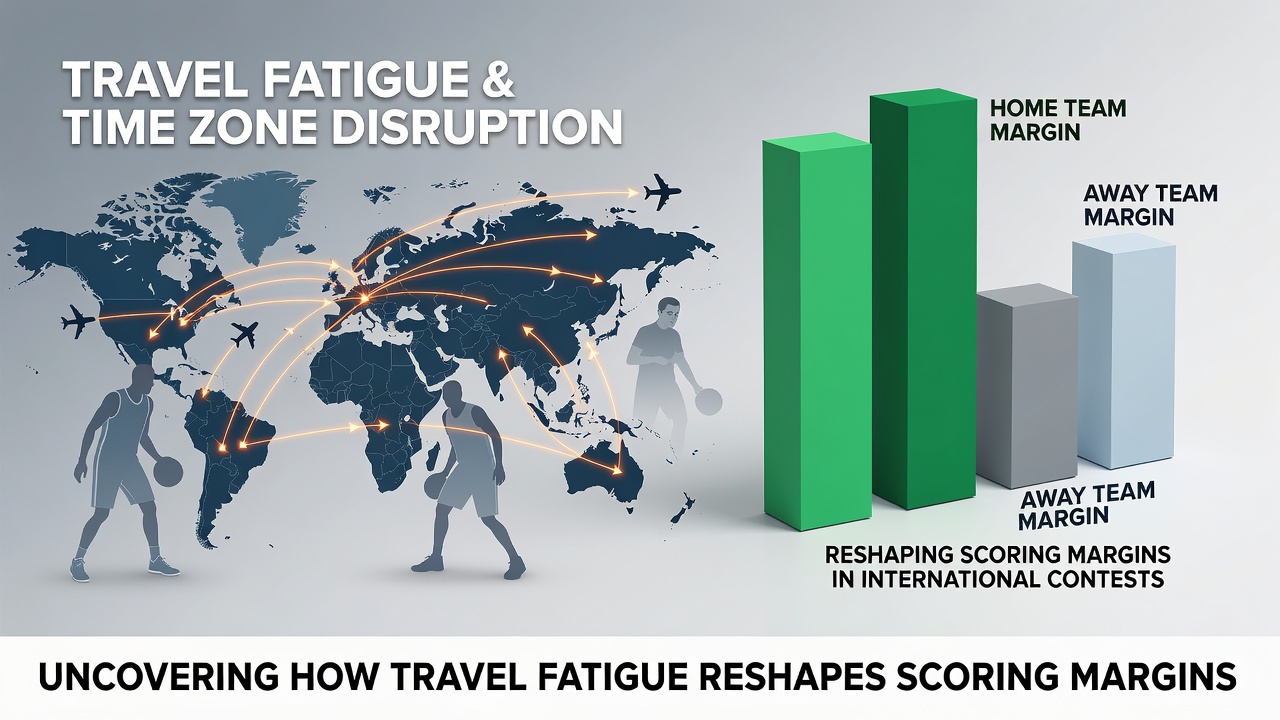
Travel across multiple time zones disrupts circadian rhythms in athletes, and data from international basketball competitions show measurable impacts on scoring margins when teams cross continents. Researchers tracking performance metrics have documented how eastward flights tend to compress scoring outputs more than westward ones because the body clock struggles against the natural day-night cycle. Studies compiled by sports science groups reveal that teams arriving within 48 hours of tip-off often post lower point totals in the first half, which widens the gap when opponents enjoy home-court advantages plus full acclimation.
Circadian Disruption and Athletic Output
Human physiology relies on internal clocks that regulate alertness, reaction time, and muscle recovery, yet rapid longitude shifts throw these systems out of sync. Data collected during FIBA World Cup qualifiers and Olympic qualifying tournaments indicate that players lose between 0.8 and 1.4 points per game on average when crossing five or more time zones eastward. Observers note this effect compounds in back-to-back contests because melatonin suppression lingers and sleep architecture remains fragmented for several nights. Westward travel produces milder decrements, yet cumulative fatigue still surfaces in fourth-quarter execution when defensive schemes require precise rotations.
Performance analysts have examined box scores from 2019 through 2025 and found consistent patterns: visiting squads that traverse the Atlantic or Pacific post lower field-goal percentages in games scheduled between 11 p.m. and 3 a.m. local time. Those who've reviewed the datasets point to slower decision-making under fatigue as a primary driver rather than outright physical decline.
Evidence from Recent Competitions
During the 2024 Paris Olympics, several national teams that flew from Asia recorded scoring margins 7 to 9 points narrower than their season averages in pool play. Australian researchers affiliated with the AIS documented similar trends in preparatory camps, where athletes crossing the International Date Line showed delayed peak power output in morning sessions. By November 2026, the FIBA Asia Cup and emerging trans-Pacific league showcases will again place squads from multiple continents on tight schedules, giving fresh datasets to compare recovery protocols.
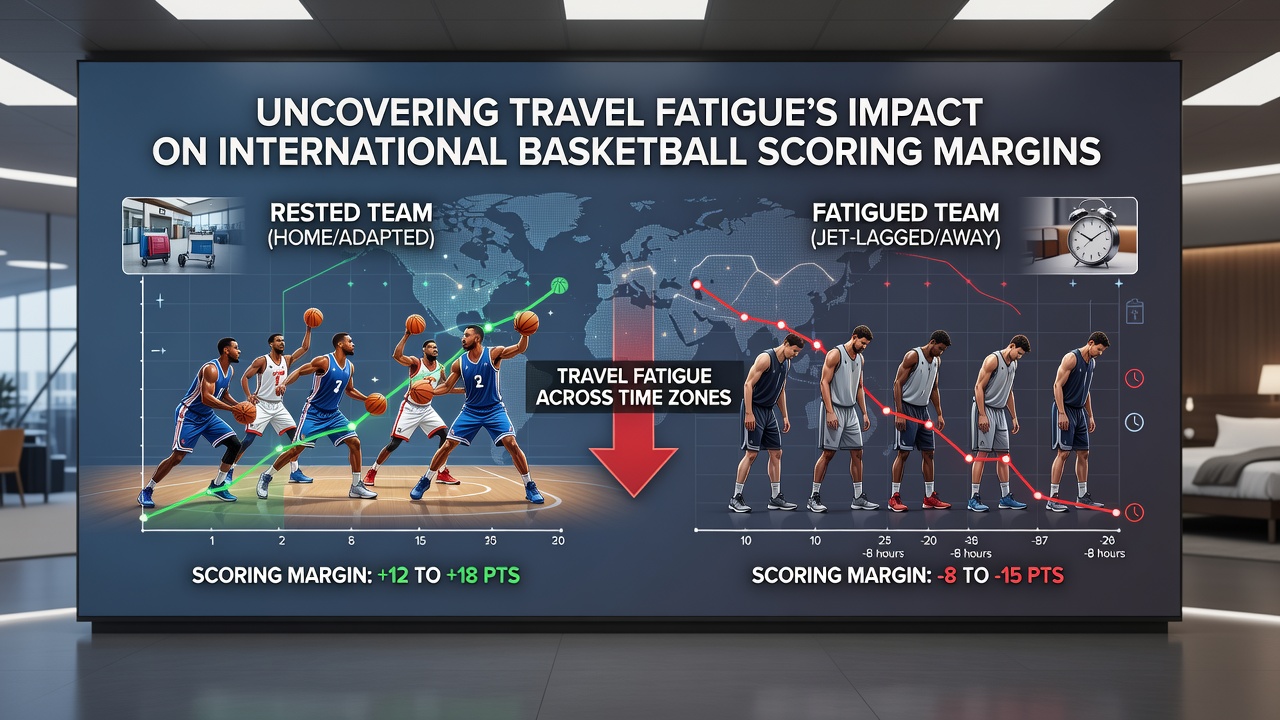
Canadian sport institutes have contributed longitudinal data showing that teams allowed three full days of adaptation before competition maintain scoring margins within 3 points of baseline expectations. In contrast, squads granted only one rest day exhibit a 12 percent drop in three-point accuracy, which directly influences final differentials. European federations have begun sharing anonymized GPS and heart-rate data to refine scheduling guidelines ahead of the 2027 World Cup cycle.
Directionality, Recovery Windows, and Scoring Trends
Eastward travel compresses the day and forces athletes to advance their body clocks, a process that takes roughly one day per hour shifted. Westward travel extends the day and permits easier phase delay. Analysts examining EuroLeague and NBA international preseason games report that eastward travelers surrender larger margins in the opening 24 minutes, whereas westward travelers experience erosion mainly after halftime when accumulated sleep debt peaks. Nutrition timing, light-exposure schedules, and strategic napping have emerged as controllable variables that blunt these effects.
One study released by a Japanese sports research center tracked heart-rate variability in national team members and linked lower variability readings directly to reduced assist-to-turnover ratios. Those metrics correlate with scoring margin compression of 4 to 6 points across a 40-minute contest. Observers tracking November 2026 qualifiers expect similar patterns unless federations extend minimum rest mandates.
League and Federation Responses
Governing bodies have started embedding travel-fatigue clauses into competition calendars. The Australian Sports Commission published guidelines recommending 72-hour buffers for transcontinental flights, while NCAA-affiliated researchers advocate for circadian-informed tip-off windows. Data shared at the 2025 World Congress on Science and Football underscored that modest schedule tweaks can preserve scoring balance without altering broadcast revenue streams.
International federations now archive standardized travel logs alongside game statistics, enabling granular regression models that isolate fatigue from talent differentials. These repositories allow coaches to adjust rotation minutes and defensive intensity based on projected circadian load rather than relying solely on intuition.
Conclusion
Longitudinal evidence confirms that time-zone travel alters scoring margins in predictable directions, with eastward flights exerting greater pressure on offensive efficiency. Continued collection of biometric and box-score data through November 2026 and beyond will refine mitigation strategies, yet the core relationship between circadian misalignment and point differentials remains consistent across competitions. Federations that integrate these findings into scheduling stand to reduce performance variance while preserving competitive equity.