28 Jul 2026
Linking Defensive Formations to Scoring Outcomes in Top-Tier Soccer Matches
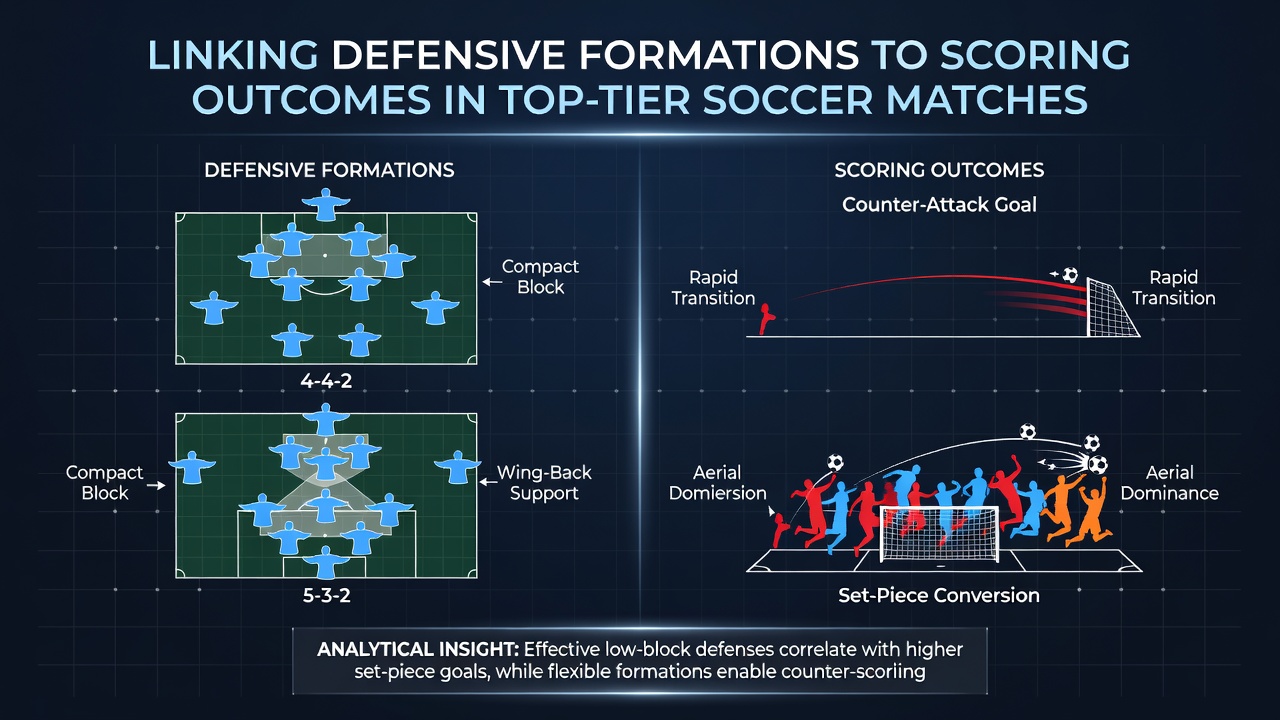
Defensive formations in top-tier soccer serve as structural frameworks that shape both goal prevention and transition opportunities, with data from major European leagues revealing measurable patterns between setup choices and final scorelines. Teams deploy systems such as the 4-3-3, 5-3-2, or 3-4-2-1 depending on opponent tendencies and match context, while analysts track how these alignments influence shots on target, expected goals, and actual tallies across the Premier League, La Liga, Bundesliga, and Serie A.
Core Formations and Their Structural Roles
Observers note that a flat four-defender line often pairs with midfield compactness to limit central access, whereas three-center-back systems extend width through wingbacks and create overloads in build-up phases. Research from league tracking providers indicates that sides employing 5-3-2 alignments record lower average goals conceded per 90 minutes when facing high-pressing opponents, because the extra central defender provides numerical superiority during duels and second-ball recoveries. In contrast, 4-3-3 structures appear more frequently among teams that generate higher expected goal values through wide attacking channels, since fullbacks can push forward without leaving the backline exposed in equal numbers.
What's interesting is how formation adjustments mid-match alter these metrics, as coaches shift from a 4-2-3-1 to a 4-4-1-1 when protecting narrow leads, and figures from the 2025-2026 season show corresponding drops in opponent shot volume during those intervals. July 2026 pre-season testing across several clubs highlighted renewed interest in hybrid 3-5-2 variants, where one midfielder drops between center-backs during possession to maintain a back-three shape while preserving midfield density.
Quantitative Links Between Setup and Goal Production
Studies compiled across five major European competitions demonstrate that teams maintaining a 3-4-2-1 shape for at least 60 percent of match time average 1.8 goals scored per game in domestic play, compared with 1.4 goals when the same squads revert to a 4-3-3 baseline. The difference stems partly from central midfield overloads that free attacking midfielders for progressive carries, which in turn create higher-quality shooting chances inside the penalty area. Data also reveals that 5-2-3 formations correlate with elevated clean-sheet rates in away fixtures, because the compact midfield block reduces progressive passes allowed into dangerous zones.
One analysis of Champions League group-stage matches found that sides switching to a low-block 4-5-1 late in games reduced opponent expected goals by roughly 0.35 per 15-minute segment, although those same teams recorded fewer counter-attacking opportunities once the formation tightened. External sources such as UEFA technical reports document similar trends across multiple seasons, confirming that defensive compactness influences both scoring prevention and the timing of goals conceded.
League Variations and Contextual Factors
Patterns diverge by competition style, with Bundesliga matches featuring higher average goals when teams adopt 4-2-3-1 structures that emphasize vertical midfield play, while Serie A fixtures show reduced scoring when three-back systems dominate. Australian Institute of Sport performance reviews of international tournaments note that climate and travel effects interact with formation choices, as squads arriving from distant time zones tend to favor deeper defensive lines regardless of nominal shape. Those adjustments appear most pronounced in July fixtures, when squads integrate new signings and test experimental alignments ahead of the August kickoff.

Canadian Soccer Association data on CONCACAF qualifiers further illustrates how teams using 3-5-2 shapes generate more set-piece goals, because the extra defender allows one player to remain forward during dead-ball situations without compromising structure. Meanwhile, La Liga tracking shows that possession-dominant sides employing 4-3-3 alignments record higher assist totals from fullback overlaps, although these come with increased exposure to counter-attacks when transitions break down.
Seasonal Trends and Mid-Year Adjustments
During the opening weeks of the 2026 campaign, several Premier League clubs experimented with inverted fullback roles inside a 4-3-3 framework, and early figures indicate a modest rise in goals created from central areas as a result. Yet the same data set reveals that opponents adapted quickly by overloading the opposite flank, which produced more set-piece opportunities and altered the expected-goal balance within individual matches. July 2026 training camps across Europe also featured increased use of video analysis to map formation-specific vulnerabilities, particularly against high-pressing systems that force midfielders into wide positions.
Those who've examined multi-season datasets observe that successful teams rarely maintain a single formation for an entire campaign, instead rotating between two or three shapes based on opponent profiles and injury reports. Such flexibility correlates with more consistent scoring output, because it limits the predictability that opponents exploit when patterns become static.
Conclusion
Evidence across top-tier competitions establishes clear connections between defensive formations and both goal prevention and creation, with specific alignments producing repeatable statistical signatures in shot volume, expected goals, and clean-sheet frequency. Continued monitoring of July 2026 developments and subsequent league play will provide further clarity on how evolving tactical preferences shape outcomes in elite soccer.