30 Sep 2026
How Equipment Regulations Alter Performance Metrics in Professional Cycling Wagers
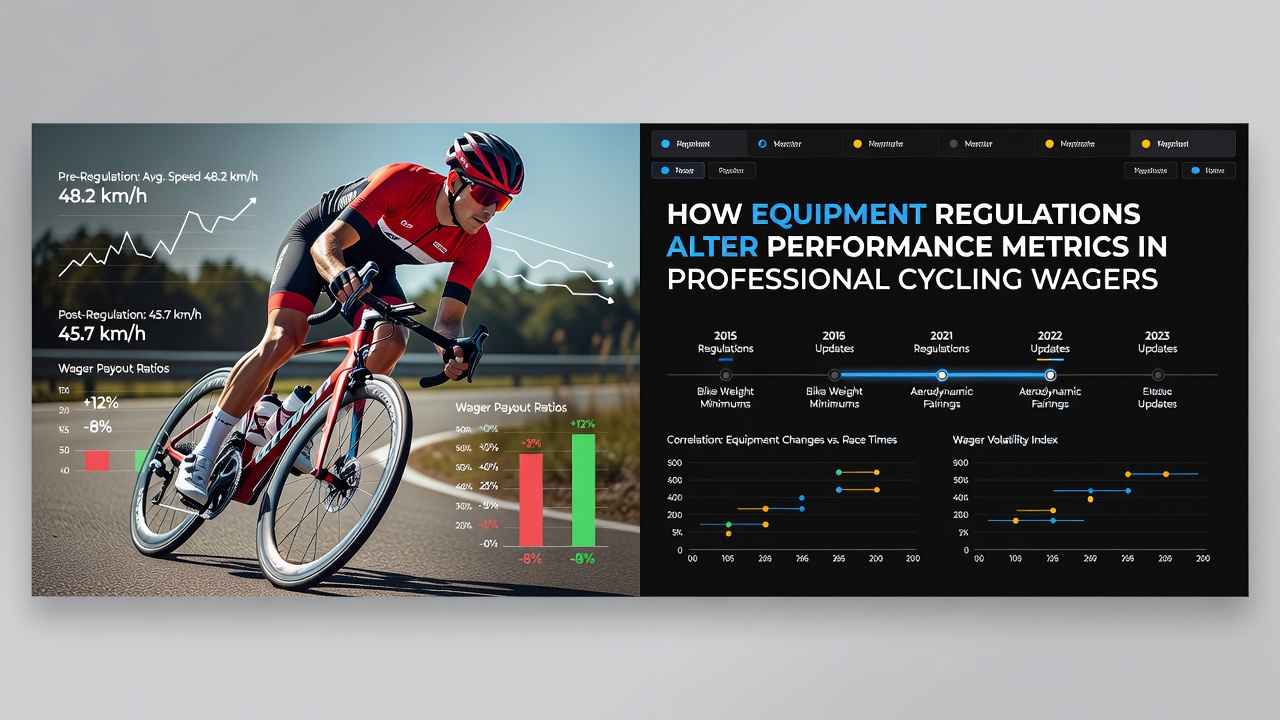
Equipment regulations in professional cycling have long shaped the measurable outputs that define race outcomes and influence wagering markets worldwide. These rules, enforced primarily by the Union Cycliste Internationale, set strict limits on bike weight, frame geometry, wheel dimensions, and aerodynamic components, which in turn affect speed, power efficiency, and stage times that bettors track closely. Data from major events such as the Tour de France and Giro d'Italia show how adjustments to these standards create shifts in performance baselines that ripple through betting lines on individual stages, overall classifications, and specialty wagers.
Regulatory Framework and Its Core Components
The UCI maintains a detailed set of technical specifications that teams must follow during competition, covering everything from minimum bike weight of 6.8 kilograms to restrictions on handlebar widths and fork designs. These parameters limit how much teams can optimize for low weight or extreme aerodynamics, and observers note that such caps force manufacturers to focus on incremental gains in stiffness and rolling resistance instead. When regulations tightened on integrated cockpits and deep-section wheels in recent seasons, average speeds on flat stages dropped by measurable margins according to race telemetry, while climbing times saw less dramatic but still consistent adjustments.
Frame material rules and wheel diameter standards further constrain innovation, requiring all approved equipment to pass wind-tunnel and laboratory testing before use in sanctioned events. Research from sports science institutions indicates that these controls reduce the variance in equipment-driven advantages, which in turn stabilizes certain performance metrics that sportsbooks rely on when setting totals for time gaps and breakaway success rates. Bettors who follow these regulatory updates often adjust their models for power-to-weight ratios and aerodynamic drag coefficients accordingly.
Performance Metric Shifts Across Disciplines
Time-trial stages reveal the clearest impact of equipment regulations, where even small changes to wheel rim depth or helmet tail length produce measurable differences in sustained wattage output and finishing times. Historical data sets compiled across multiple Grand Tours demonstrate that when the UCI adjusted rules on time-trial bike extensions, average speeds fell within a narrow but predictable range, altering the odds offered on specialist riders versus general classification contenders. Mountain stages show subtler effects because gravity and rider power dominate, yet regulations on tire widths and brake systems still influence descending speeds and energy conservation over long days in the saddle.
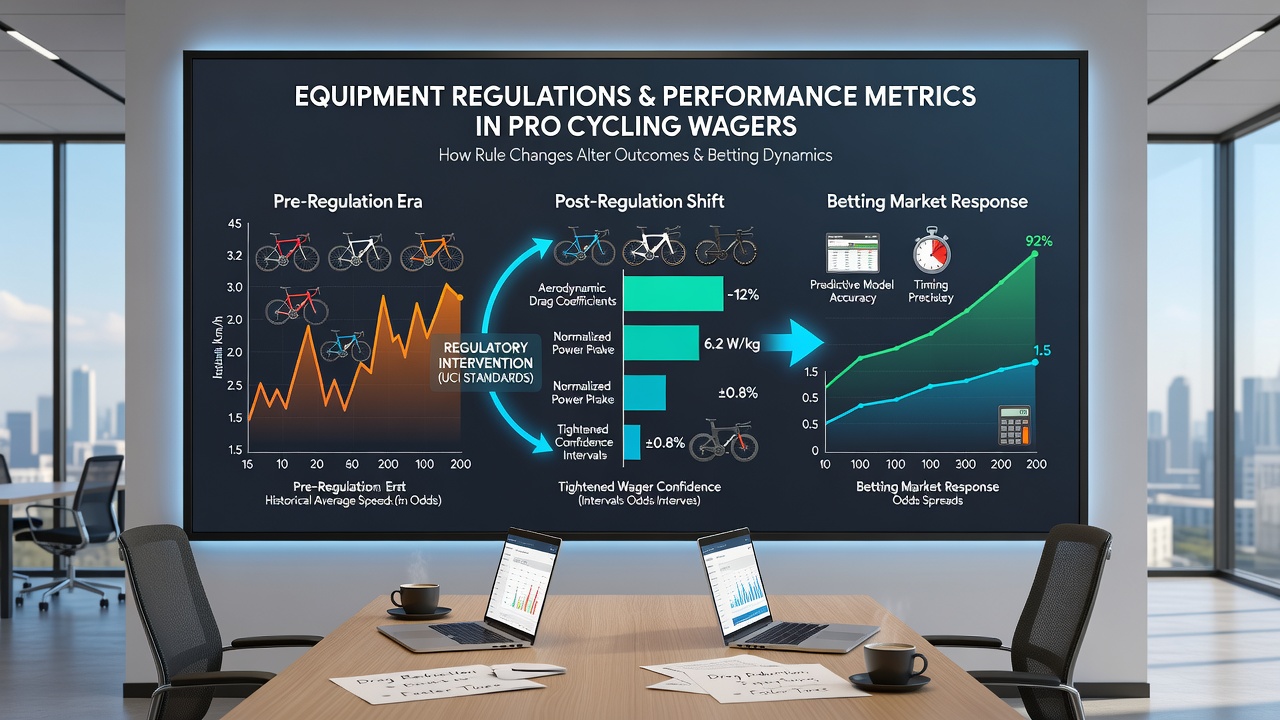
Track events at the velodrome operate under even stricter equipment oversight, including fixed gear ratios and frame geometry limits that directly cap top-end velocity and acceleration profiles. Analysts tracking these metrics have documented how rule modifications correlate with changes in qualifying times and pursuit event margins, data that feeds into niche wagering markets on Olympic and World Championship cycles. Because equipment must remain identical across rounds, performance consistency becomes a key variable that bettors monitor when assessing form and fatigue patterns.
Implications for Wagering Markets and Data Modeling
Betting operators incorporate equipment regulation updates into their algorithms when constructing lines for stage wins, jersey classifications, and head-to-head matchups. When new wheel or frame restrictions take effect, historical performance databases require recalibration because previous speed and power records no longer serve as direct comparables. Market makers at major sportsbooks have adjusted over/under totals on individual stage durations following regulatory shifts, and these adjustments reflect aggregated telemetry rather than rider ability alone. Those who study equipment compliance patterns gain insight into which teams hold an edge in adapting to revised standards quickly.
September 2026 brought renewed scrutiny to several pending UCI proposals on electronic shifting systems and integrated hydration units, developments that racing teams and data providers watched for potential effects on long-stage energy management. Early telemetry from post-regulation events showed modest but measurable compression in time gaps during transitional terrain, a pattern that influenced live betting liquidity on mountain-top finishes. Regulatory bodies outside Europe, including oversight groups in Australia and Canada, have begun aligning their equipment standards more closely with UCI guidelines, creating more uniform global datasets that sportsbooks can reference when pricing international circuits.
Case Examples from Recent Seasons
One analysis of the 2025 Vuelta a España highlighted how a mid-season clarification on handlebar extension rules coincided with slower average times on two key time-trial stages, prompting sportsbooks to widen spreads on specialist versus domestique performances. Another dataset from the 2024 World Championships track program revealed that updated frame stiffness testing reduced peak velocities in the team pursuit by fractions of a second, enough to shift implied probabilities in exotic wager types. These instances illustrate how equipment rules function as an external variable that overlays rider physiology and team tactics, requiring bettors to layer regulatory context into their forecasting models.
Conclusion
Equipment regulations continue to serve as a structural force that recalibrates the performance metrics central to professional cycling wagers. By capping variables such as weight, aerodynamics, and component geometry, governing bodies create more predictable yet still dynamic baselines that affect stage times, power outputs, and classification margins. Data providers and betting markets integrate these changes through updated telemetry and historical recalibrations, ensuring that equipment compliance remains a core factor alongside rider form and race conditions. As standards evolve, particularly with potential 2026 adjustments, the measurable effects on speed and efficiency will keep reshaping how performance data translates into wagering opportunities across global cycling circuits.