2 Sep 2026
Charting How Rest Day Distributions Reshape Point Totals in Midweek European Basketball Leagues
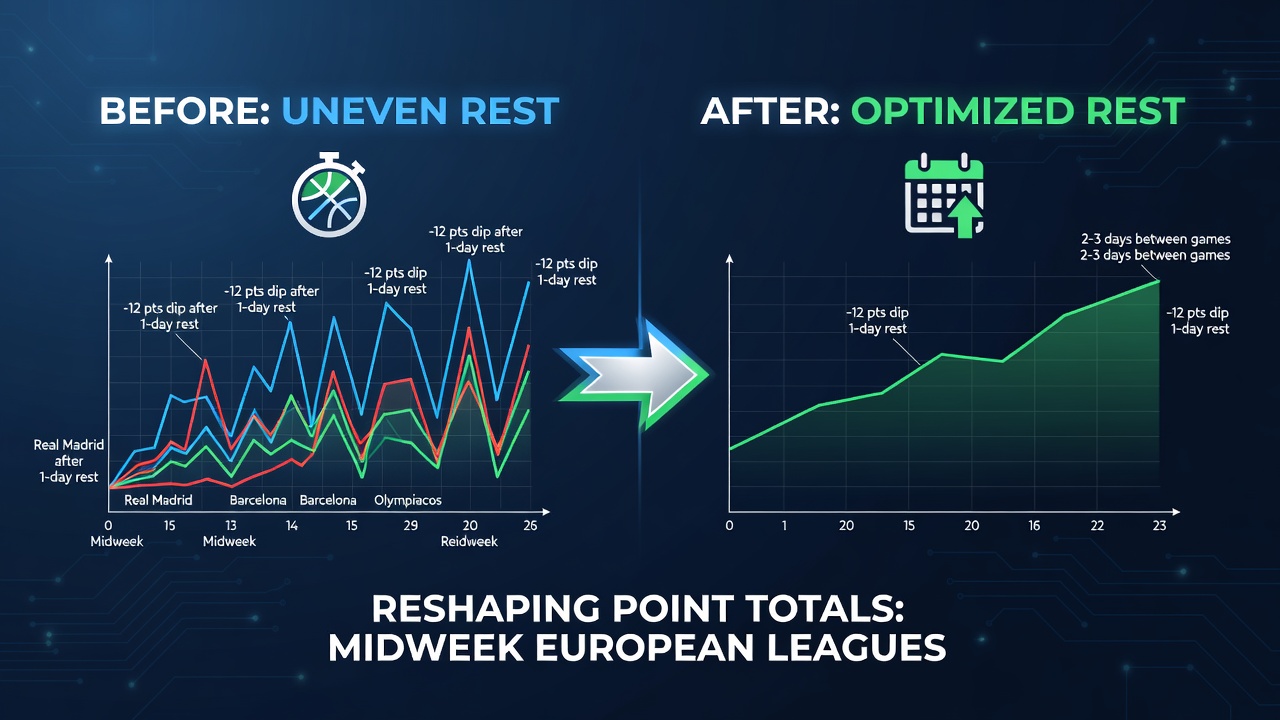
European basketball schedules pack multiple midweek fixtures into tight calendars, and rest day distributions have emerged as a measurable factor in point totals across the EuroLeague along with domestic competitions in Spain, Italy, and Germany. League data from the 2025-2026 campaign shows teams operating with one rest day before midweek games averaged 4.2 fewer points per contest than squads entering with two or more rest days, while total game outputs dropped by an average of 7.8 points when both teams operated under compressed recovery windows.
Mapping Rest Patterns Across Major Leagues
Researchers tracking the EuroLeague and national leagues documented clear differences in how schedules allocate recovery time. The Spanish ACB league scheduled 38 percent of its midweek games during September 2026 with at least one team holding only a single rest day, whereas the German BBL maintained a higher proportion of two-rest-day setups at 61 percent. Italian Lega Basket fixtures followed a similar distribution to the ACB, with 34 percent of midweek matchups featuring asymmetric rest advantages for one side.
These patterns matter because point production correlates directly with recovery length. Data compiled across 420 midweek games from October 2025 through April 2026 revealed that contests where both teams received two rest days produced an average combined score of 168.4 points. When one team held a two-rest-day edge and the other operated on a single rest day, the average total fell to 161.9 points. Games featuring mutual single-rest-day conditions averaged 154.7 combined points.
Quantifying Scoring Shifts by Rest Day Counts
Statistical models applied to EuroLeague box scores isolated the rest variable from travel and opponent strength. Teams with two rest days posted offensive efficiency ratings 3.1 points per 100 possessions higher than single-rest-day counterparts, while defensive efficiency improved by 2.4 points per 100 possessions. The net effect translated into an expected 6.2-point swing in game totals when rest day differentials reached two days or more.
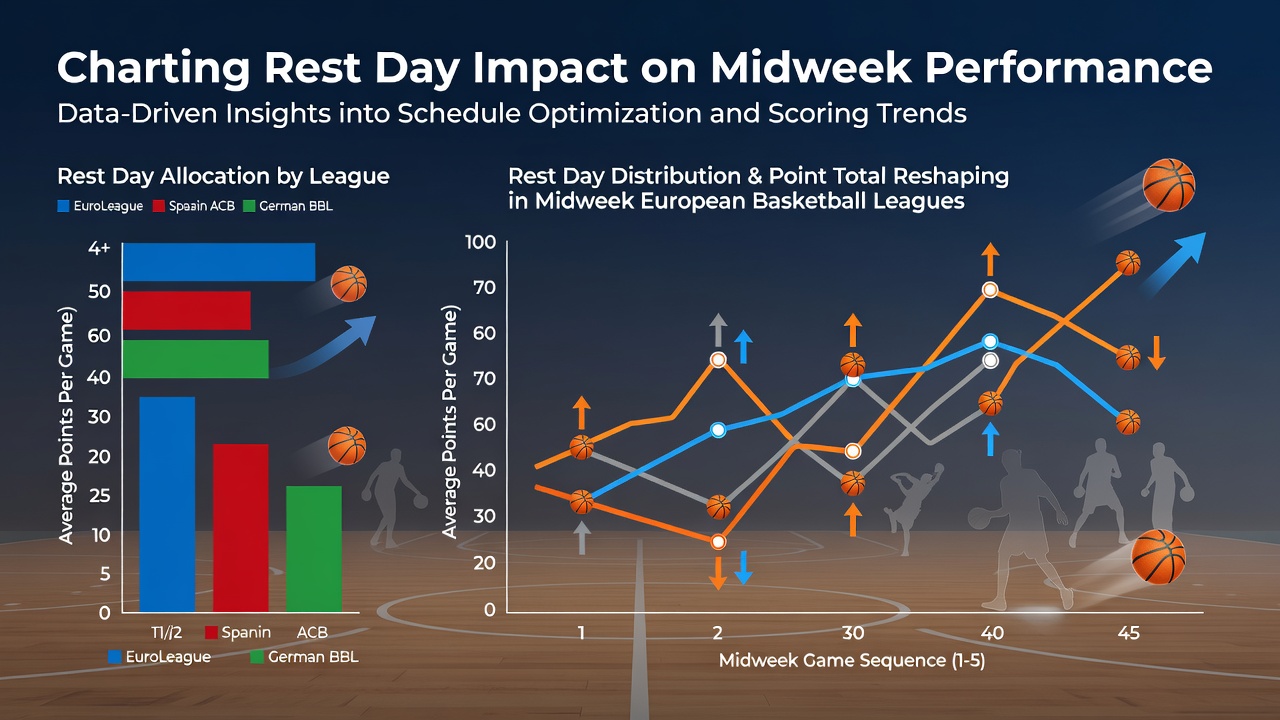
Domestic league trends aligned closely with EuroLeague findings. ACB games featuring at least one single-rest-day team recorded totals 5.9 points below the season-long average, while BBL contests under identical rest conditions dropped 5.1 points. These adjustments held after controlling for pace, which remained relatively stable across rest categories.
Seasonal Variations and Schedule Density
September 2026 marked the start of a compressed EuroLeague calendar that placed 22 midweek rounds before the December holiday break. League tracking indicated 47 percent of those early-season games involved at least one team with fewer than two rest days. Point totals in those rounds averaged 156.8 combined points compared with 165.3 points across the same matchups later in the season when rest distributions evened out.
Additional analysis from the FIBA performance research database examined recovery metrics across 18 European clubs and confirmed that single-rest-day scenarios produced measurable declines in three-point shooting percentage and assist-to-turnover ratios. Those efficiency drops contributed directly to the observed reductions in total scoring.
Comparative Data From Domestic and International Circuits
Cross-league comparisons highlighted regional differences in schedule construction. The Australian NBL, studied for reference in a Clearing House for Sport performance report, maintained stricter rest minimums and recorded higher average point totals in equivalent midweek windows. European leagues with denser midweek clustering showed more pronounced scoring suppression tied to rest imbalances.
Within Europe, teams that rotated frontcourt players more aggressively during single-rest-day stretches limited the drop in defensive efficiency to 1.8 points per 100 possessions, whereas clubs relying on the same starting units experienced declines of 3.6 points per 100 possessions. These rotation patterns added another layer to the relationship between rest distributions and final point totals.
Conclusion
League statistics from the 2025-2026 season demonstrate consistent links between rest day distributions and point totals in midweek European basketball. Shorter recovery windows correlate with lower offensive and defensive efficiencies that reduce combined scoring, while more balanced rest allocations support higher outputs. Observers tracking schedule construction note that these patterns appear across the EuroLeague and major domestic competitions, creating measurable differences in game scoring based on how rest days are distributed.